
THE BALL
156 to 163 grams
Hard, round and usually white, with a circumference of 224 to 235 mm. It is played only with the flat side of the stick.
The pitch in numbers doodlehockey

THE FIELD GAME, PLAINLY
Eleven a side, sixty minutes, one small white ball.
New to hockey, or watching your child's first match? The game makes far more sense once you know a handful of numbers: how big the pitch is, why goals only count from the circle, and what each coloured card costs a team. Here they are, taken from the official rules.
Plain English, with the sources linked.
11 v 11 4 × 15 min
Check what a card meansTHE BASICS
All three come straight from the
FIH Rules of Hockey, 2026 edition.
THE BALL
Hard, round and usually white, with a circumference of 224 to 235 mm. It is played only with the flat side of the stick.
The pitch in numbersTHE CLOCK
Two-minute breaks after the first and third quarters, and 10 minutes at half-time. Time stops after a goal.
More quick answersTHE CIRCLE
A goal only counts if an attacker played the ball inside the circle. A long-range shot from outside does not score.
What happens in the circle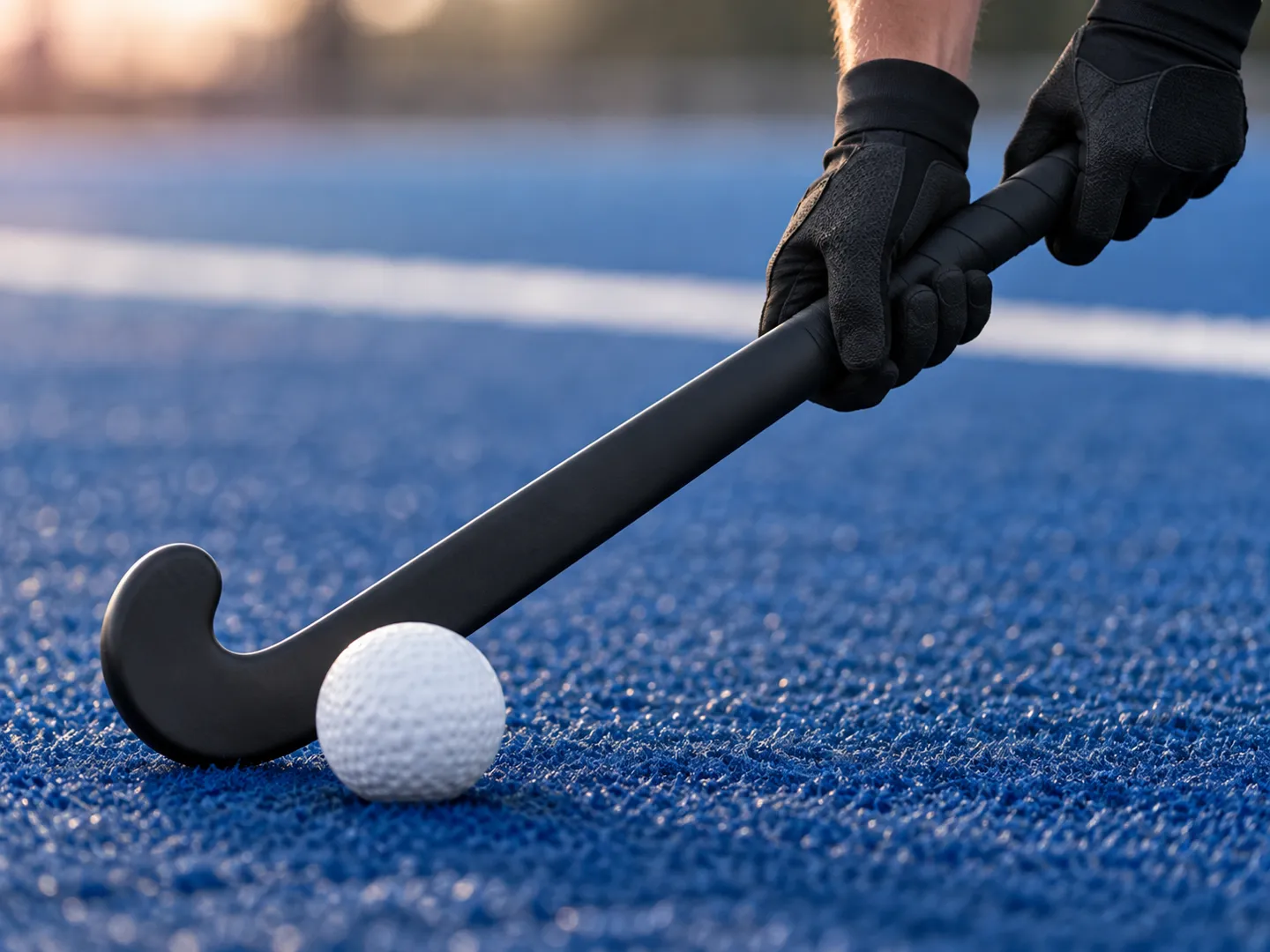
WATCH LIKE A FAN
Players may only play the ball with the flat face of the stick, so watch how they turn the stick over to move the ball left and right.
A shot from outside the circle cannot score. The real action is getting the ball into the circle under control.
After a green or yellow card, one team is a player short for a while. Notice how they defend and how the other team attacks.
When the ball is pushed out from the back-line, attackers and defenders rush to their places. It is one of the game's big set pieces.
THE PITCH IN NUMBERS
The measurements are fixed by the rules,
to the centimetre.
91.40 × 55.00 m
Length by width
The pitch is a rectangle with a centre-line and two 23-metres lines, set 22.90 metres from each back-line. All lines are 75 mm wide and count as part of the field.
THE FIELD OF PLAY
3.66 × 2.14 m
Width by height
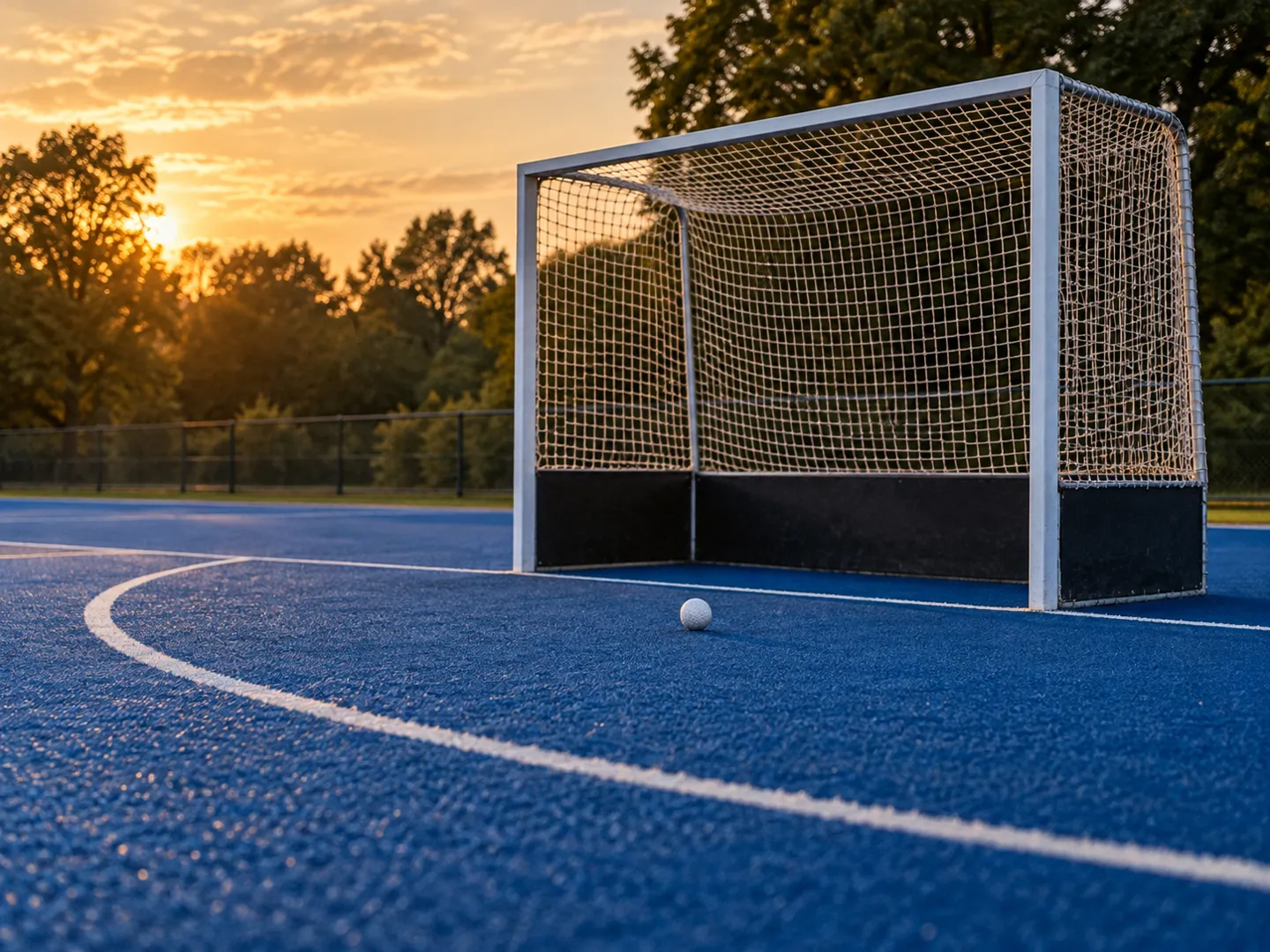
The goal sits outside the field, in the middle of each back-line. The penalty spot is 6.40 metres in front of it, and the circle reaches 14.63 metres out.
THE GOAL
Those numbers explain the shape of the game: lots of passing to work the ball into a small circle, and set pieces when defenders break the rules inside it.
A QUICK CARD CHECK
Hockey umpires show coloured cards and award set pieces. Pick one to see what it means for the team, as set out in the FIH Rules of Hockey.
Suspension times count playing time only, so the clock stops for them when play stops. Umpires can also simply caution a player with words.
A SHORT HISTORY
The Hockey Museum notes that a first association was formed in 1875 and lasted until 1879. The Hockey Association, the body whose centenary was marked in 1986, followed in 1886.
Men's hockey first appeared at the London 1908 Games, with six teams. Women's hockey joined the Olympic programme at Moscow 1980.
India has won eight Olympic gold medals in hockey, including six in a row between 1928 and 1956.
The international federation, the FIH, was founded on 7 January 1924 by seven national associations. Artificial turf was first used for Olympic hockey at Montreal 1976.
Olympics.com puts the world's players at 30 million, 51 per cent of them women. In England, around 140,000 people play regularly in more than 800 clubs.
QUICK QUESTIONS
Short answers to the questions newcomers ask most.
Under the FIH Rules of Hockey, a match is four quarters of 15 minutes. There is a 2-minute break after the first and third quarters and a 10-minute half-time. Competitions and teams can agree other durations.
A team can have up to eleven players on the field at once, usually including a goalkeeper. The rules allow a team of up to sixteen people, so up to five substitutes, and a competition can raise that to eighteen.
It is the D-shaped area in front of each goal, marked 14.63 metres out from the back-line. A goal only counts if an attacker played the ball inside the circle and it did not leave the circle before crossing the goal-line.
A green card suspends a player for 2 minutes of playing time, a yellow card for at least 5 minutes, and a red card for the rest of the match. In each case the team plays with one fewer player.
Men's hockey was first played at the London 1908 Olympic Games, with six teams. The women's competition was added at the Moscow 1980 Games.
Updated
A NAME WITH PACE
doodlehockey.com is part of the DoodleSale portfolio. It isn't in an auction right now, but you can ask about leasing it.